IVF Treatment in Turkey
IVF is an evidence-based fertility treatment in which egg and sperm are combined in the laboratory and the resulting embryo is transferred to the uterus.

IVF in Turkey, At a Glance
IVF (in vitro fertilisation) is an assisted-reproduction treatment in which eggs and sperm are combined in a laboratory and the resulting embryo is transferred to the uterus. At our centre in Istanbul, every step is led personally by Op. Dr. Ali İhsan Gönenç at Medical Park Bahçelievler Hospital, with English-speaking coordination for international patients.
- Who it helps: blocked tubes, male-factor infertility, ovulation disorders, endometriosis, unexplained infertility.
- The cycle: ovarian stimulation → egg retrieval → fertilisation (IVF/ICSI) → embryo transfer → hCG blood test.
- How long: one active cycle is about 2-3 weeks; many international patients plan a single short stay in Istanbul.
- Cost in Turkey: depends on your protocol and any add-ons (ICSI, PGT, freezing); you receive a personalised quote after assessment.
- Turkish law: IVF is for married heterosexual couples using their own eggs and sperm, donor gametes, surrogacy and non-medical sex selection are not permitted.
- Eligibility & age: assessed individually after ovarian-reserve and health checks.
- Where: Medical Park Bahçelievler Hospital, Istanbul, with single-consultant continuity.
When is IVF recommended?
IVF may be recommended for many conditions including tubal blockage, male factor, ovulation problems, unexplained infertility and some genetic conditions. Suitability is determined by a detailed medical evaluation.
- Tubal blockage or damage
- Male factor (low sperm count/motility)
- Ovulation disorders
- Unexplained infertility

What you should know about IVF
Process, cost, the age factor and what influences success.
Why Turkey Is Chosen
Turkey has become a frequently chosen destination for IVF thanks to experienced reproductive teams, modern laboratories and accessible coordination for international patients.
What sets our approach apart is that the process is led by a single specialist physician, based on individual evaluation rather than protocol automation.
What Is IVF?
IVF stands for in vitro fertilisation, “in vitro” means in glass, i.e. in the laboratory. It is the assisted-reproduction technique in which fertilisation happens outside the body, and it is the foundation of modern fertility care.
Despite the everyday name, a baby is not grown in a tube. Only fertilisation and the earliest days of embryo development take place in the lab; the embryo is then transferred to the uterus, where pregnancy continues naturally. The first IVF baby was born in 1978, and the technique has since helped millions of families conceive.
IVF involves one of two fertilisation methods. In conventional IVF, eggs and prepared sperm are placed together in a dish and fertilisation occurs on its own. In ICSI (intracytoplasmic sperm injection), a single selected sperm is injected directly into an egg, the preferred method for male-factor infertility. Your test results guide which approach is right for you.
The goal at every stage is to support embryo development and prepare the uterus for implantation. Here, the whole pathway is planned and followed by one specialist rather than a rotating team.
Why Do Patients Choose IVF in Turkey?
Turkey has become one of the most established destinations for fertility treatment, combining experienced reproductive teams and modern laboratories with well-organised care for international patients.
- Experienced, high-volume centres and modern embryology laboratories.
- Single-consultant continuity here: Op. Dr. Ali İhsan Gönenç leads your treatment from first assessment to transfer.
- English-speaking coordination and help planning your stay.
- Accessibility: for many international patients, treatment in Turkey is more accessible than long private waiting pathways at home.
- One efficient visit: a cycle can often be completed in a single stay of around 2-3 weeks.
We focus on realistic, individualised care rather than headline promises. Rather than quoting average figures, we assess your own situation and explain what is achievable in your case, a more honest basis for such an important decision.
The IVF Process, Step by Step
A typical IVF cycle runs from planning to a pregnancy test in seven main stages. The steps below outline a standard pathway; your real plan is tailored to you.
Assessment & planning
Hormone tests, ultrasound and medical history assess your ovarian reserve and overall health; a suitable stimulation protocol is chosen.
Ovarian stimulation
Usually over 8-12 days, daily hormone injections help several eggs mature at once.
Follicle monitoring
Ultrasound and blood tests track follicle growth; the “trigger” injection is timed precisely.
Egg retrieval (OPU)
Under light sedation and ultrasound guidance, mature eggs are collected with a fine needle, about a 15-20 minute procedure.
Fertilisation & culture
Eggs are fertilised by conventional IVF or ICSI; embryos are grown to the blastocyst stage (day 5) in a specialised incubator.
Embryo transfer
The best embryo(s) are placed in the uterus with a thin, soft catheter. Good-quality spare embryos can be frozen for later.
hCG blood test
About 10-12 days after transfer, a beta-hCG blood test confirms pregnancy.
| Stage | Approx. time | What happens |
|---|---|---|
| 1. Assessment & planning | Before the cycle | Tests, ultrasound, history; protocol chosen |
| 2. Ovarian stimulation | ~8-12 days | Injections help several follicles develop |
| 3. Follicle monitoring | During stimulation | Ultrasound/blood tracking; trigger timed |
| 4. Egg retrieval | ~15-20 min | Eggs collected under light sedation |
| 5. Fertilisation & culture | 3-5 days | IVF/ICSI; embryos grown to blastocyst |
| 6. Embryo transfer | ~10 min | Embryo placed in uterus; spares frozen |
| 7. hCG blood test | ~10-12 days after transfer | Pregnancy confirmed by blood test |
How to Prepare for IVF
The weeks before treatment are a chance to support egg and sperm quality, and your own comfort during the cycle.
- Start folic acid and any vitamins your doctor recommends
- Stop smoking and alcohol, and cut back on caffeine
- Work towards a healthy weight and a balanced diet
- Prioritise sleep and stress management
- Complete the requested hormone, infection and semen tests
This is also when your treatment is planned: ovarian reserve (AMH), hormone profile and semen analysis results help set the right protocol for you. For more, see our guides on IVF nutrition and lifestyle and low AMH and ovarian reserve.
Who Is IVF For?
IVF can be recommended in many situations where natural conception has not been possible. Suitability is always confirmed by a detailed medical assessment.
| Situation | Why IVF helps |
|---|---|
| Blocked or damaged tubes | Fertilisation is achieved in the lab when egg and sperm cannot meet naturally |
| Male-factor infertility | With low sperm count or motility, ICSI injects a single sperm into the egg |
| Ovulation disorders (e.g. PCOS) | Controlled stimulation supports egg development and retrieval |
| Endometriosis | An effective option to improve fertilisation and implantation chances |
| Unexplained infertility | A successful alternative when simpler methods have not worked |
| Genetic disease risk | PGT allows selection of healthy embryos |
| Reduced ovarian reserve | Assessed early with an individualised protocol |
IVF vs ICSI vs IUI: What's the Difference?
“What is the difference between IVF and ICSI?” is one of the most searched fertility questions. All three are assisted-reproduction techniques, but they differ in how and where fertilisation happens.
| Method | How it works | Where fertilisation happens | Typically for |
|---|---|---|---|
| IUI (insemination) | Prepared sperm is placed into the uterus | Inside the body | Mild male factor, unexplained infertility; open tubes |
| Conventional IVF | Egg and sperm are placed together in a dish | In the lab (spontaneous) | Tubal factor and moderate problems |
| ICSI | One healthy sperm is injected into the egg | In the lab (by injection) | Significant male factor, previous fertilisation failure |
IUI is simpler and less invasive; IVF and ICSI give more control over fertilisation and higher chances in more complex cases. Your specialist recommends the method that fits your diagnosis.
What Affects the Cost of IVF in Turkey?
There is no single fixed price for IVF, the cost depends on your treatment plan. Rather than a headline figure, here are the factors that shape it, so you know exactly what you are paying for.
- Pre-treatment tests (hormones, infection screen, semen analysis, ultrasound)
- Stimulation protocol and medication dose, which vary from person to person
- Whether ICSI or PICSI is added in the laboratory
- Whether PGT (genetic testing) is performed
- Embryo or egg freezing and storage choices
- Any additional procedures and follow-up needed
IVF in Turkey: Law, Age Limits & Eligibility
Turkey regulates assisted reproduction carefully, and it is important for international patients to understand the rules before travelling.
| Permitted in Turkey | Not permitted |
|---|---|
| IVF/ICSI for married heterosexual couples | Donor eggs, donor sperm or donor embryos |
| PGT to avoid serious genetic or sex-linked disease | Non-medical sex (gender) selection |
| Embryo freezing and later frozen transfer | Treatment outside licensed centres |
On age and embryo transfer, Turkish regulations guide how many embryos may be transferred: generally a single embryo in the first two attempts for women under 35, and up to two embryos from the third attempt or from age 35. There is no arbitrary single “cut-off” age, eligibility is judged individually on ovarian reserve and health.
What Affects IVF Success?
IVF success cannot be reduced to a single number; it reflects a combination of factors and varies from person to person. A realistic, individual assessment is far more meaningful than an average figure online.
| Factor | Effect |
|---|---|
| Woman's age | The strongest single factor; egg number and quality decline with age |
| Egg & sperm quality | Determines the embryo's genetic and developmental potential |
| Embryo quality | Good blastocyst-stage embryos improve the chance of implantation |
| Uterine lining (endometrium) | Adequate thickness and a healthy environment are needed for implantation |
| Lifestyle | Smoking, excess weight and chronic stress can reduce outcomes |
| Laboratory & team | An experienced embryology team and modern lab conditions matter |
Some factors, such as age, cannot be changed, but many can be improved with the right protocol, a good laboratory and lifestyle adjustments. Our aim is to optimise every controllable variable for your specific situation.
Is IVF Safe? Possible Risks
IVF has been performed for decades and its safety is well understood. As with any medical treatment, it helps to know the possible risks in advance.
- Ovarian hyperstimulation syndrome (OHSS): usually mild; modern protocols and close monitoring keep the risk low.
- Multiple pregnancy: linked to the number of embryos transferred, single embryo transfer (SET) markedly reduces it.
- Temporary side effects: mild bloating, tenderness or mood changes from hormone medication.
- Rare events: very rare bleeding or infection after egg retrieval, and a small chance of ectopic pregnancy.
Risks vary by person and protocol and are minimised with close monitoring and a careful decision on embryo number. Your specialist explains all relevant risks in detail before you begin.
Frequently Searched Questions
Quick answers to what patients most often search. See the full FAQ below for more detail.
| Soru / Question | Kısa yanıt / Quick answer |
|---|---|
| How much is IVF in Turkey? | Cost depends on your protocol and any add-ons; we provide a personalised, itemised quote after assessment. |
| Is there an IVF age limit in Turkey? | Eligibility is assessed individually; regulations also guide how many embryos may be transferred by age. |
| What is Turkey's IVF success rate? | Success is individual and depends mainly on age and embryo quality; we discuss realistic expectations at consultation. |
| Can I choose the baby's gender in Turkey? | No, sex selection is only permitted for medical reasons (serious sex-linked disease), not for family balancing. |
| Anyone had IVF in Turkey, is it safe? | Care is delivered in a licensed, hospital-based setting under one consultant; you can ask us anything before deciding. |
| Do I need several trips to Turkey? | Many patients complete a cycle in a single stay of about 2-3 weeks; we plan the timing with you in advance. |
Why Op. Dr. Ali İhsan Gönenç?
On an IVF journey, continuity and trust matter most. Here, every stage of your treatment, from first assessment through egg retrieval and embryo transfer, rests on the individual attention of one specialist, not on automated protocols or a rotating team.
- Single-consultant continuity: Op. Dr. Ali İhsan Gönenç leads your care throughout.
- Individualised plan: shaped by your own tests, not a standard package.
- Established hospital setting: a modern laboratory within Medical Park Bahçelievler Hospital.
- Transparent, pressure-free communication, medical assessment first, clear information always.
With a focus on gynaecology, obstetrics and assisted reproduction, we support you at every step. You can arrange an assessment consultation as your first step.
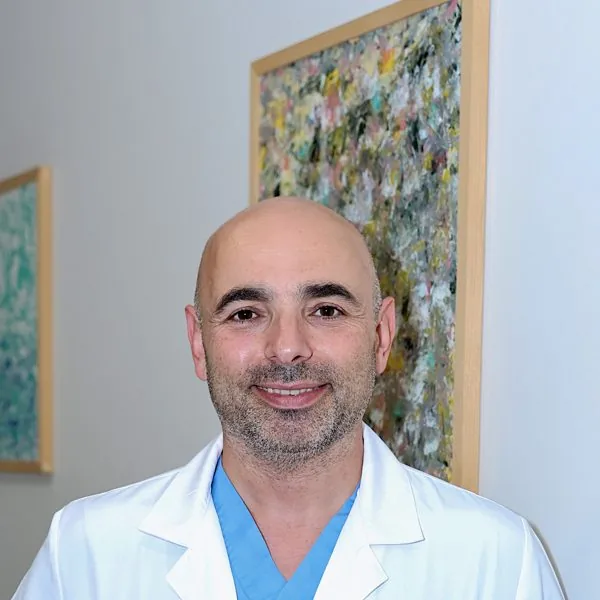
Op. Dr. Ali İhsan Gönenç
Obstetrics & Gynecology · IVF, Medical Park Bahçelievler IVF Center
Medically reviewed:Op. Dr. Ali İhsan Gönenç is an experienced obstetrician and gynecologist focused on infertility and IVF. The medical information on this page has been reviewed by him for accuracy.
View Doctor Profile →Frequently Asked Questions
Common questions, clearly answered.
✓ Medical content reviewed by Op. Dr. Ali İhsan Gönenç · Last updated: July 2026
Egg retrieval is performed under light sedation and is generally comfortable. Mild bloating can occur during stimulation.
The active treatment phase is usually 2-3 weeks, covering ovarian stimulation, retrieval and transfer.
IVF (in vitro fertilization) is an assisted reproductive treatment in which eggs and sperm are fertilized in the laboratory and the resulting embryo is transferred to the uterus. It is used when natural conception is not achieved.
The ovaries are stimulated, mature eggs are retrieved and fertilized with sperm in the lab, and a healthy embryo is transferred to the uterus. Each step is planned under medical supervision.
The main stages are ovarian stimulation and monitoring, egg retrieval, fertilization in the lab, embryo development, and embryo transfer. A pregnancy test follows about two weeks later.
IVF may be recommended for blocked tubes, unexplained infertility, male-factor infertility, ovulation disorders or endometriosis. Suitability is decided by a detailed evaluation.
Egg retrieval is done under light sedation, so no pain is felt, and embryo transfer is usually painless. Any discomfort afterward is generally mild and short-lived.
Success depends on age, egg and sperm quality, embryo quality and the uterine environment, so it varies from person to person. A personalized assessment gives a more accurate expectation than general figures.
An 'IVF baby' is simply a baby conceived through in vitro fertilization. Millions of healthy babies have been born this way worldwide.
When treatment is planned and managed directly by the physician rather than coordinators, it supports continuity and personalized decisions. This is central to how care is delivered here.
Related Reading
- How Is IVF Done? A Step-by-Step Guide to the IVF Process
- Fertility Testing: How to Know If You Are Fertile (Female and Male)
- Male Infertility and IVF: Causes, Diagnosis and Treatment Options
- Low AMH & Diminished Ovarian Reserve
Sources
The information on this page is supported by the following independent, authoritative sources:
Book your consultation with Op. Dr. Ali İhsan Gönenç
No pressure · Medical evaluation first · Clear communication