IUI (Intrauterine Insemination) in Turkey
IUI places prepared sperm directly into the uterus with a thin catheter, timed to ovulation. It is a simpler assisted reproduction step that may be considered before moving to IVF.
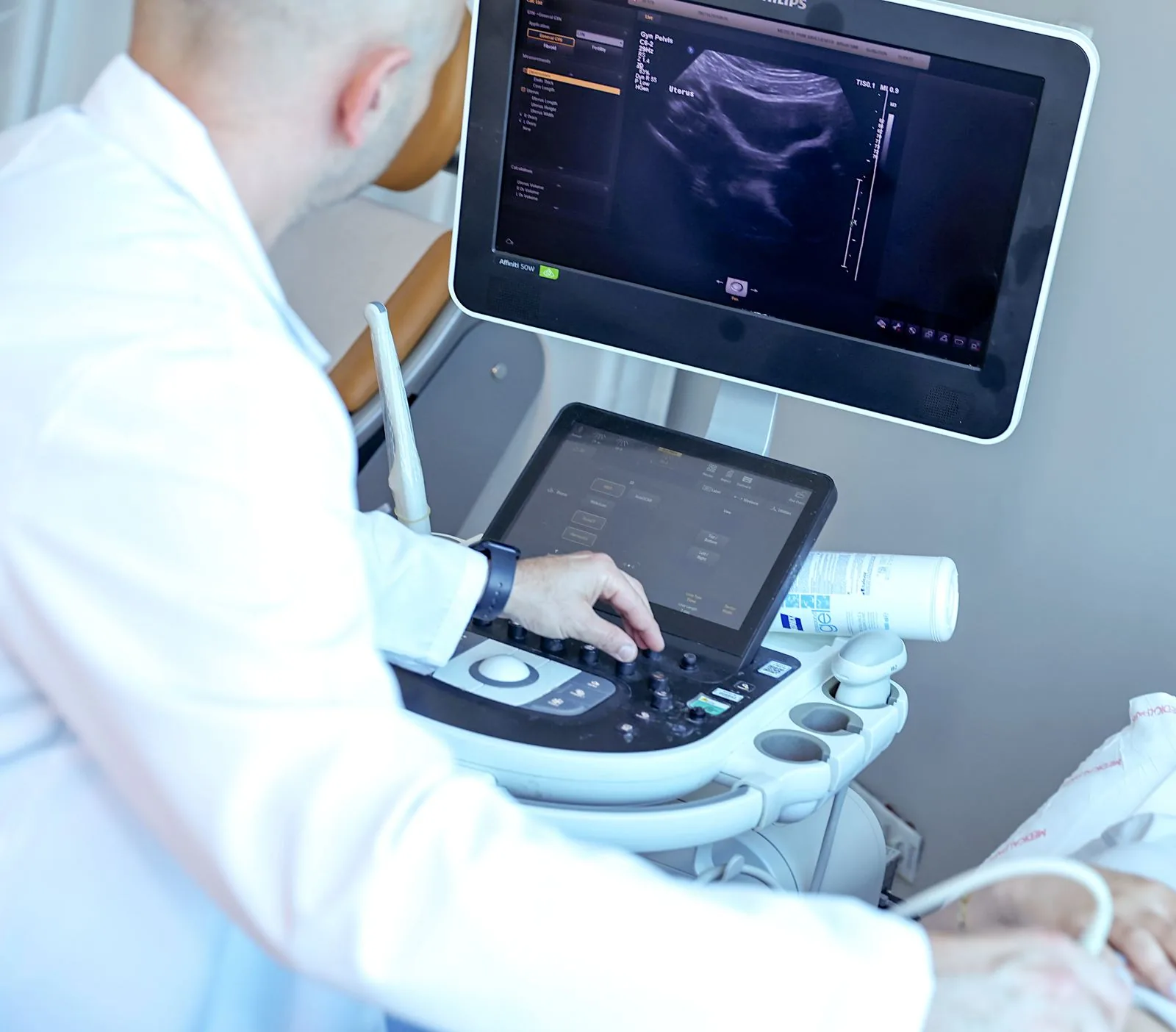
IUI at a Glance
IUI (intrauterine insemination) places washed and concentrated sperm directly into the uterus with a thin, soft catheter, timed to ovulation. The aim is to shorten the distance motile sperm must travel to reach the egg. The procedure itself takes a few minutes and usually needs no anaesthesia.
- What is it? Prepared sperm placed into the uterus at the time of ovulation.
- Who is it for? Unexplained infertility, mild male factor, ovulation disorders and cervical factor.
- Duration The procedure takes minutes; monitoring runs across one menstrual cycle.
- Anaesthesia Usually not required; a short rest follows the procedure.
- Difference from IVF Fertilisation happens inside the body, not in the laboratory.
What Is IUI?
IUI, or intrauterine insemination, is a procedure in which a semen sample is washed and prepared in the laboratory, then placed directly into the uterus with a thin catheter at the time of ovulation.
Normally sperm must travel through the cervix to reach the fallopian tubes. IUI shortens that route: laboratory preparation separates the motile sperm, which are then released straight into the uterine cavity. Fertilisation still takes place inside the fallopian tube, within the body. This is the fundamental difference from IVF treatment.
IUI is the less invasive end of assisted reproduction. In suitable patients it may be considered as a step before moving to IVF. Whether it is appropriate depends on the couple's test results and history, and is decided by the physician.
Who Is IUI Suitable For?
For IUI to be meaningful, at least one fallopian tube should be open and sperm parameters should be above a certain level. Situations commonly assessed include:
- Unexplained infertility
- Mild to moderate male factor infertility
- Ovulation disorders such as polycystic ovary syndrome
- Problems related to cervical mucus
- Difficulty with intercourse, including vaginismus
- Mild endometriosis
Where both tubes are blocked, male factor is severe, or ovarian reserve is significantly reduced, IVF is considered instead of IUI. Tubal patency is usually assessed before treatment, and ovarian reserve is reviewed alongside it, see low AMH and ovarian reserve.
Which Tests Are Done Before IUI?
The couple is assessed together before a treatment decision. Tests usually requested are:
- Hormone assessment and ultrasound review of ovarian reserve, including AMH
- An imaging test to confirm the fallopian tubes are open
- Semen analysis for the male partner, see fertility testing
- Infectious disease screening for both partners
- Thyroid and prolactin assessment where indicated
Once the results are interpreted together, the physician decides whether IUI is appropriate and, if so, plans the cycle.
How Is IUI Performed? Step by Step
An IUI cycle is completed within one menstrual cycle and generally follows these steps:
- Cycle monitoring and mild stimulation: Treatment starts in the first days of the period. The cycle may be followed naturally, though low dose medication is often used to gently stimulate the ovaries.
- Follicle tracking by ultrasound: Egg development is monitored with scans. The aim is to keep the number of mature follicles controlled.
- Trigger injection: When a follicle reaches the right size, an injection triggers ovulation and the insemination is timed accordingly.
- Sperm preparation: The sample given on the day is washed in the laboratory; motile, healthy sperm are separated and concentrated into a small volume.
- The insemination: The prepared sample is passed into the uterus through a thin, soft catheter. This takes a few minutes, is usually painless and needs no anaesthesia.
- Afterwards: After a short rest you can return to daily life. Progesterone support is given where indicated, see luteal support.
The outcome is assessed roughly two weeks later with a beta-hCG blood test.
What to Expect After IUI
No special bed rest is required. Normal daily life, work and light exercise can continue. General advice:
- Take prescribed medication regularly
- Avoid heavy lifting and strenuous exertion
- Avoid smoking and alcohol
- Do not take medicines your doctor has not recommended
- Contact the clinic for severe pain, fever or unusual discharge
Mild cramping or spotting can occur. For nutrition and lifestyle guidance see this guide.
How Many IUI Cycles Are Attempted?
IUI is generally attempted for a limited number of cycles. If pregnancy is not achieved after that, the situation is reviewed and moving to IVF is considered. The number of attempts is individualised according to age, duration of infertility and test results.
The decision rests not only on the number of cycles but on the response seen in each one, which is why regular contact with your physician matters throughout.
IUI or IVF?
The two treatments answer different problems. In IUI fertilisation happens inside the body and the process is simpler. In IVF the eggs are collected, fertilisation takes place in the laboratory, and the resulting embryo is transferred to the uterus.
- IUI: tubes open, sperm parameters adequate, and a less invasive step is the goal.
- IVF: tubes blocked, significant male factor, reduced ovarian reserve, or IUI attempts have not resulted in pregnancy.
- ICSI: a laboratory step within IVF used where male factor is pronounced, see our ICSI page.
Which route is appropriate is determined by reviewing the couple's tests and previous treatment response. Results vary from person to person, so the decision is made individually. A fuller comparison is in IUI vs IVF.
What Are the Risks of IUI?
IUI is a low risk procedure. There are still points to be aware of:
- Multiple pregnancy: if more than one follicle develops during stimulation, the chance of twins or more increases. Follicle numbers are therefore monitored closely by ultrasound.
- Ovarian hyperstimulation syndrome (OHSS): uncommon with low dose protocols, but monitoring matters, see OHSS.
- Mild cramping and spotting: can occur briefly after the procedure.
- Infection: very rare, as the procedure is performed under sterile conditions.

Op. Dr. Ali İhsan Gönenç
Obstetrics & Gynaecology · IVF, Medical Park Bahçelievler IVF Centre
Medically reviewed:Op. Dr. Ali İhsan Gönenç is an obstetrician and gynaecologist focused on infertility and IVF. The medical information on this page has been reviewed by him.
View doctor profile →Natural Cycle IUI and Medicated IUI
IUI can be planned in two ways, and the choice sets both how closely you are monitored and how the cycle proceeds.
- Natural cycle IUI: no medication, or very little. Your own ovulation is tracked and the insemination is timed to it. Suitable where cycles are regular.
- Medicated IUI: mild stimulation aims for one or more mature follicles. It comes forward where ovulation is irregular and in unexplained infertility.
With medication the chance of a multiple pregnancy rises, so monitoring is closer and a cycle may be cancelled if more follicles develop than intended. That cancellation is a safety decision, not a setback in your treatment.
The Medication Used, and How You Are Monitored
The drugs used in medicated IUI are generally at lower doses than in IVF, because the aim is a small number of follicles rather than many.
- Oral ovulation-inducing tablets.
- Low-dose injectable stimulation where needed.
- A trigger injection to time ovulation.
- Luteal support after the procedure in some cases.
Monitoring is by ultrasound on set days of the cycle, measuring follicle diameter and the thickness of the uterine lining. For the wider picture of fertility medication see our page on the IVF process.
How the Day Is Decided
Timing is one of the variables that matters most in IUI. The procedure has to fall in the narrow window around ovulation.
There are two ways to fix it. When the dominant follicle reaches an adequate diameter on ultrasound, a trigger injection is given and the procedure is scheduled a set number of hours later. Alternatively the LH rise is tracked in urine and the timing follows that.
The appointment time you are given comes out of that calculation. If you need to move it, speak to the clinic rather than shifting it yourself. See ovulation and the fertile window.
How the Sperm Sample Is Prepared
The sample provided on the day is not used as it is. It goes through a laboratory preparation step, which is an integral part of the procedure.
- The sample is left briefly to liquefy.
- A washing step removes the seminal fluid.
- Motile, structurally suitable sperm are separated out.
- The small volume of prepared sample is then used for the insemination.
Removing the seminal fluid is necessary, because introducing it directly into the uterus can cause cramping. The number of motile sperm recovered after preparation also informs whether the procedure goes ahead that day. See semen analysis results explained.
What the Procedure Feels Like
IUI is short, needs no anaesthetic and causes no significant pain for most patients. It is done in the same position as a routine gynaecological examination.
The prepared sample is passed through the cervix into the uterus using a very fine, soft catheter. You may feel brief cramping or a sensation of pressure. The procedure itself takes a few minutes.
You may be asked to lie down briefly afterwards, then you can return to your normal day. Prolonged bed rest is not recommended and does not improve the outcome.
The Two Week Wait
The period between the procedure and the pregnancy test is widely described as the hardest part. What not to do matters as much as what to do.
- Take any luteal support exactly as prescribed and do not stop it on your own judgement.
- Carry on with normal daily life; heavy restriction is not required.
- Testing early gives misleading results, so use the day you are given.
- If the trigger injection contained hCG, an early test can be falsely positive.
- Mild cramping and spotting are common; heavy bleeding should be reported.
On interpreting the test and the numbers that follow, see hCG levels in early pregnancy.
If IUI Does Not Work
IUI is not repeated indefinitely. After a set number of attempts, continuing is not advised. That is not a failure of the treatment, it is the point at which moving up a step becomes the better option.
The decision weighs your age, how many cycles have been done, how many follicles developed each time, the state of the tubes and the semen parameters. Where age is more advanced, the step change is made sooner.
The next step is usually IVF. For the comparison see IUI versus IVF and IVF in Turkey.
When IUI Is Not the Right Option
IUI is not appropriate for every couple. In the situations below, going directly to IVF is the sounder route.
- Both fallopian tubes blocked.
- Semen parameters significantly below the reference range.
- Advanced endometriosis.
- More advanced maternal age with markedly reduced ovarian reserve.
- An adequate number of IUI cycles already attempted.
The state of the tubes is decisive here and is assessed beforehand. See hydrosalpinx and IVF and fertility testing.
Frequently Asked Questions
Clear answers to the questions we hear most.
The procedure is usually painless and needs no anaesthesia. It feels similar to having a smear test, with possible brief mild discomfort or cramping.
The insemination itself takes a few minutes. After a short rest you can return to daily life the same day. The preparation phase runs with monitoring across the cycle.
Prolonged bed rest is not necessary. A short rest after the procedure is enough and normal activities can continue.
Usually about two weeks after the procedure, with a beta-hCG blood test. Testing earlier can give misleading results.
At least one tube should be open, because fertilisation takes place in the tube. Tubal status is assessed with imaging before treatment.
No. Some patients are followed in a natural cycle. In most cases low dose medication is preferred to support egg development.
If more than one follicle develops during stimulation, the chance of a multiple pregnancy can increase. Follicle development is therefore monitored closely by ultrasound.
If pregnancy is not achieved after a set number of cycles, the tests are reviewed and moving to IVF is considered. The decision is individual.
Related Reading
- IUI vs IVF: Differences and How to Choose
- Ovulation Explained: When It Happens and How to Find Your Fertile Window
- Fertility Testing: How to Know If You Are Fertile (Female and Male)
- Unexplained Infertility: Meaning and Options
Sources
The information on this page is supported by the following independent, authoritative sources:
Book a consultation with Op. Dr. Ali İhsan Gönenç
No pressure · Medical assessment first · Clear communication