Egg Freezing in Turkey
Egg freezing is the collection of a woman's eggs, which are frozen by vitrification and stored for a future pregnancy.

Egg Freezing in Turkey, At a Glance
Egg freezing (oocyte cryopreservation) collects a woman's eggs and stores them by vitrification for use in a future pregnancy. It preserves fertility for medical or personal reasons, and results are best when eggs are frozen at a younger age.
- Who it's for: before cancer treatment, low ovarian reserve, or to preserve fertility for the future.
- The process: ovarian stimulation → egg retrieval → vitrification → storage (about 2 weeks active).
- Age matters: under 35 is generally ideal; egg quality declines with age.
- No sperm needed: unlike embryo freezing, egg freezing does not require sperm at this stage.
- Is it painful? Egg retrieval is done under light sedation and is usually comfortable.
- Storage: eggs are stored under the applicable regulations; duration and renewal follow the law.
- Cost: depends on your plan and storage; you receive a personalised quote after assessment.
- First step: an ovarian-reserve (AMH) and ultrasound assessment.
Who chooses egg freezing?
It may suit those who wish to delay fertility, need preservation before medical treatment (e.g. oncological), or have a declining reserve.
- A wish to delay fertility
- Preservation before medical treatment
- Declining ovarian reserve
- Personal and professional planning
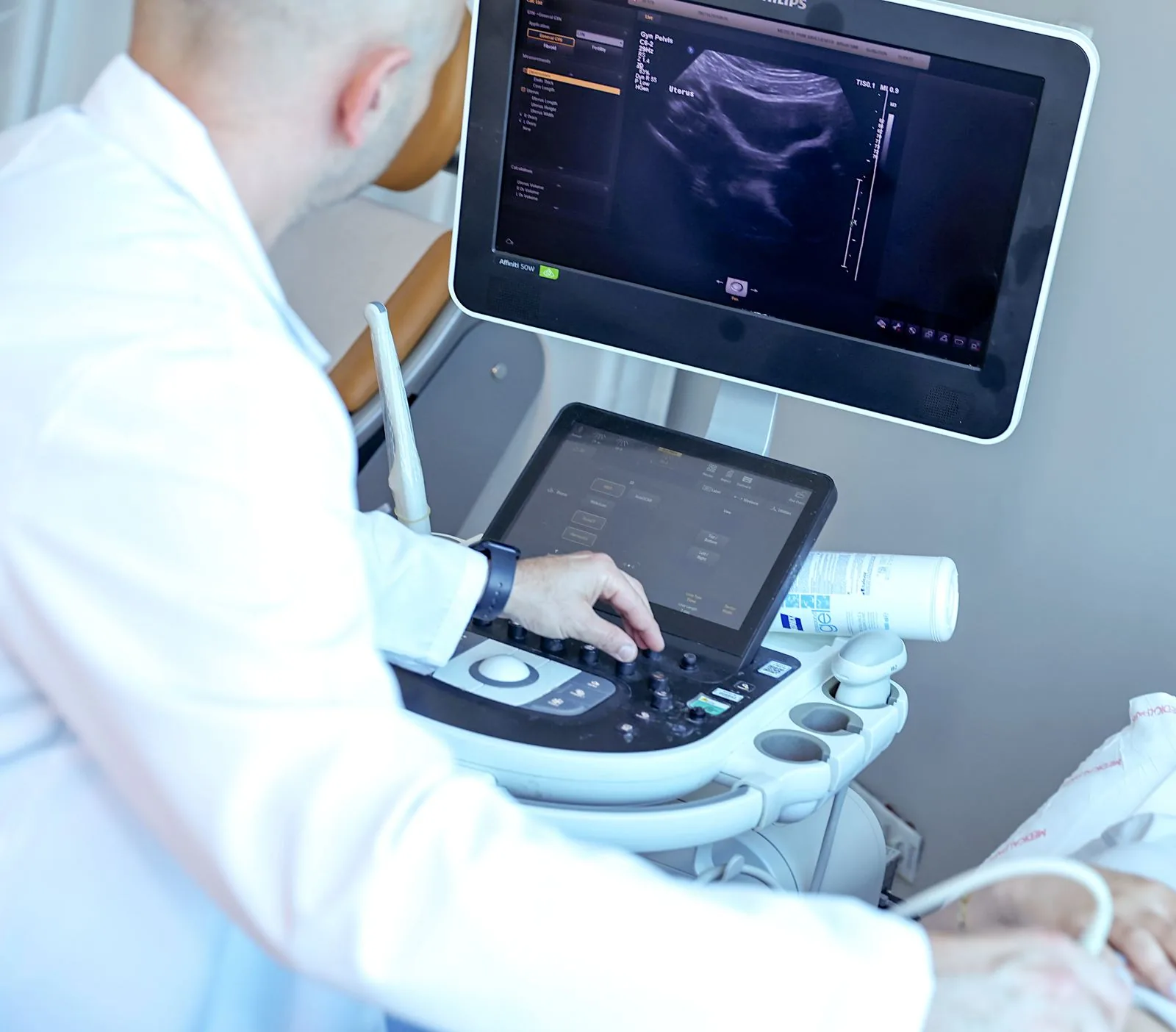
Egg freezing step by step
A short and well-tolerated process.
Assessment
Reserve tests and planning are done.
Stimulation & Monitoring
Medication supports egg development, which is monitored.
Retrieval & Freezing
Mature eggs are collected and vitrified.
Storage
Eggs are stored under safe conditions.
When to Consider Fertility Preservation
Egg freezing may be considered before a medical treatment, when wishing to delay fertility, or when ovarian reserve is declining.
The decision is entirely personal and should be supported by realistic counseling.
What Is Egg Freezing and How Does It Work?
Egg freezing (oocyte cryopreservation) is the collection of a woman's mature eggs, which are frozen using a rapid method called vitrification and stored for future use. The method essentially preserves the eggs' current quality; eggs frozen at a younger age can offer better reproductive potential later.
Frozen eggs are thawed when pregnancy is desired and usually fertilized with micro-injection (ICSI). The resulting embryo is transferred to the uterus in a suitable cycle.
Who Should Consider Egg Freezing?
Those who wish to postpone fertility, those without the right timing or partner yet, those needing preservation before a medical treatment (such as oncological), and those with a declining ovarian reserve may consider egg freezing. Egg freezing for single women is also increasingly common.
Suitability and timing are determined by an individual medical evaluation. The decision should be made with realistic expectations.
How the Process Works, Step by Step
The process resembles the early stages of IVF and usually takes two weeks: evaluation and tests, ovarian stimulation (8-12 days of hormone injections), regular ultrasound and blood monitoring, the trigger shot, egg retrieval under light sedation, and finally freezing by vitrification.
Every step is carried out under physician supervision with individualized dosing.
Vitrification: The Modern Freezing Method
Vitrification is a modern method that freezes eggs very rapidly. This speed prevents ice crystal formation inside the cell, minimizing damage to the eggs. As a result, post-thaw survival rates are high.
How Many Eggs Should Be Frozen?
The recommended number of eggs depends on age, ovarian reserve and future goals. More eggs can increase the chance of a future pregnancy, but this depends on the number and quality obtained. Some people may need more than one retrieval cycle to reach the target.
Egg Freezing and the Importance of Age
Timing is the most critical element of egg freezing. Freezing when reserve and quality are higher offers better potential. Postponing the decision may require more cycles later. So if you are considering it, an early evaluation is helpful.
Risks and Safety
Egg freezing is generally a safe procedure. Possible risks include mild side effects from injections, rare complications from retrieval, and ovarian hyperstimulation syndrome (OHSS). Close monitoring and individualized dosing minimize these risks.
After the Procedure and Storage
After egg retrieval, most people can rest and return home the same day. Mild bloating may last a few days. Vitrified eggs are stored safely for a long time under suitable conditions; quality depends on the age at freezing more than the storage duration.
How Is the Cost Determined?
The cost of egg freezing varies from person to person; medication dose, the number of cycles needed and storage duration all play a role. A clear cost is given only after a medical evaluation. We transparently explain the factors; fixed prices online can be misleading.
Frequently Asked Questions
Can single women freeze their eggs? Yes, individuals who wish to preserve fertility can choose it. Is the procedure painful? Retrieval is done under light sedation and is comfortable. Is pregnancy guaranteed? No; the method preserves potential but does not guarantee pregnancy.
For questions, you can contact us and plan a personalized evaluation.
What Is Egg Freezing?
Egg freezing, oocyte cryopreservation, collects and stores a woman's eggs at very low temperatures. The goal is to preserve today's eggs, while they are younger and of better quality, for a pregnancy later in life.
Eggs are frozen using vitrification, an ultra-rapid technique that gives far higher survival rates than older slow-freezing methods. When needed, the eggs are warmed, fertilised with sperm (usually by ICSI), and the resulting embryo is transferred to the uterus.
The key difference from embryo freezing is that egg freezing does not need sperm at this stage, making it a flexible option for women who do not yet have a partner but want to protect their fertility. For more, see our egg freezing guide.
Who Is Egg Freezing For?
Egg freezing can be chosen for medical or personal (elective) reasons. Suitability depends on your ovarian reserve and overall health.
| Situation | Why egg freezing helps |
|---|---|
| Before cancer treatment | Chemotherapy and radiotherapy can harm ovarian reserve; eggs can be preserved beforehand |
| Low ovarian reserve | If reserve is declining, eggs can be stored while quality is better |
| Family history of early menopause | A protective option when menopause may come early |
| Endometriosis / ovarian surgery | May affect reserve, freezing beforehand can help |
| Preserving fertility for the future | For those delaying motherhood for career, study or personal reasons |
Where AMH is low or early menopause runs in the family, timing matters; our guides on low AMH and improving egg quality may help.
The Egg Freezing Process
The first half of egg freezing is the same as an IVF cycle: the ovaries are stimulated and mature eggs are collected. The difference is that the eggs are frozen rather than fertilised.
Assessment
AMH, hormone tests and ultrasound assess your ovarian reserve; a tailored stimulation plan is made.
Ovarian stimulation
Over about 8-12 days, daily hormone injections help several eggs mature.
Monitoring
Ultrasound and blood tests track follicle growth; the trigger injection is timed.
Egg retrieval
Mature eggs are collected under light sedation with ultrasound guidance (~15-20 min).
Vitrification
Mature eggs are flash-frozen in the laboratory.
Storage
Frozen eggs are stored safely until you need them.
| Stage | Approx. time | What happens |
|---|---|---|
| Assessment | 1 visit | AMH/ultrasound; plan |
| Stimulation + monitoring | ~8-12 days | Injections, follicle tracking |
| Egg retrieval | ~15-20 min | Collection under sedation |
| Freezing | Same day | Vitrification |
| Storage | Until needed | Secure storage |
Age and Egg Freezing Success
Timing is the single biggest factor in egg freezing. Eggs age with you, so the earlier they are frozen, the better the chance of a future pregnancy.
| Age range | General trend |
|---|---|
| Under 35 | Egg number and quality are usually higher, the ideal window |
| 35-37 | Reserve begins to decline, but good outcomes are still possible |
| 38 and over | Egg quality drops more noticeably; more eggs may be needed |
This shows only a general trend; your own situation depends on ovarian reserve (AMH, antral follicle count). To bank enough eggs, more than one retrieval cycle is sometimes recommended, especially at an older age or with low reserve.
How Long Can Eggs Be Stored?
Vitrified eggs can be stored for a long time in liquid-nitrogen tanks, and storage time does not reduce egg quality.
In the UK, the law changed in 2022 so that eggs can be stored for up to 55 years, with consent renewed every 10 years. In Turkey, egg freezing and storage are carried out under the applicable regulations, and duration, renewal and use are governed by law. We explain the current rules and consents for your situation at your consultation.
When you are ready to use them, the eggs are warmed and fertilised in the laboratory; from there the pathway is the same as the embryo transfer in a standard IVF cycle.
Egg Freezing in Turkey
Turkey is a well-established destination for fertility preservation, with experienced teams, modern vitrification laboratories and organised care for international patients.
- Single-consultant continuity: Op. Dr. Ali İhsan Gönenç leads your care from assessment to storage.
- Modern vitrification lab within Medical Park Bahçelievler Hospital.
- English-speaking coordination and help planning a short, efficient stay.
- Realistic, individualised advice, based on your reserve, not headline promises.
Is Egg Freezing Safe?
Egg freezing is widely performed and its safety is well understood. A few points are worth knowing.
- Temporary effects from hormone medication: mild bloating or tenderness.
- OHSS (ovarian hyperstimulation): usually mild; modern protocols keep the risk low.
- Very rare retrieval risks: minor bleeding or infection.
- Not a guarantee: not every frozen egg leads to a pregnancy, number and age matter.
All relevant risks and realistic expectations are explained before you begin, so your decision is fully informed.
What Affects the Cost of Egg Freezing?
There is no single fixed price, the cost depends on your plan. Here are the factors that shape it, so you know what you are paying for.
- Pre-treatment tests (AMH, hormones, ultrasound)
- The stimulation protocol and medication dose
- The number of retrieval cycles needed to bank enough eggs
- Annual storage and renewal
- Later warming, ICSI and transfer when you use the eggs
Egg Freezing vs Embryo Freezing
There are two ways to preserve fertility: freezing eggs or freezing embryos. Which suits you depends on whether you have a partner and on your medical situation.
| Feature | Egg freezing | Embryo freezing |
|---|---|---|
| Sperm needed? | No | Yes (for fertilisation) |
| Who it's for | No partner, or wanting flexibility | Couples with a partner |
| What is stored | Unfertilised eggs | Fertilised embryos |
| When used | Warmed, fertilised by ICSI, then transferred | Warmed and transferred |
Both are frozen by vitrification with high survival rates. Your specialist helps you choose the option that best fits your circumstances and preferences.
Frequently Searched Questions
| Soru / Question | Kısa yanıt / Quick answer |
|---|---|
| How much does egg freezing cost? | It depends on your protocol, number of cycles and storage; we give a personalised, itemised quote after assessment. |
| What is the egg freezing process like? | Ovarian stimulation for ~8-12 days, then a short egg-retrieval procedure under light sedation; eggs are vitrified the same day. |
| Is there an egg freezing age limit? | Eligibility is individual; younger eggs give better outcomes, so earlier is generally better. |
| How long can frozen eggs be stored? | For many years, in the UK up to 55 years with 10-yearly renewal; in Turkey per the applicable regulations. |
| How many eggs should I freeze? | It depends on age and reserve; younger patients may need fewer, older patients usually more. |
| Do frozen eggs make healthy babies? | Many healthy babies have been born from vitrified eggs; outcomes depend on egg number and age at freezing. |
Why Op. Dr. Ali İhsan Gönenç?
Egg freezing is a time-sensitive, personal decision. Here, the whole pathway, from assessment to storage, is guided by one specialist and tailored to your reserve and your goals.
- Single-consultant continuity and an individualised stimulation protocol
- Modern laboratory and vitrification experience at Medical Park Bahçelievler
- Transparent, pressure-free guidance and realistic expectations
You can arrange an assessment consultation as your first step toward preserving your fertility.

Op. Dr. Ali İhsan Gönenç
Obstetrics & Gynecology · IVF, Medical Park Bahçelievler IVF Center
Op. Dr. Ali İhsan Gönenç is an experienced obstetrician and gynecologist focused on infertility and IVF. The medical information on this page has been reviewed by him for accuracy.
View Doctor Profile →Frequently Asked Questions
Common questions, clearly answered.
✓ Medical content reviewed by Op. Dr. Ali İhsan Gönenç · Last updated: July 2026
Vitrified eggs can be stored safely for a long time. Consult your physician for details.
Retrieval is done under light sedation and is generally comfortable.
Egg freezing is the process of freezing and storing a woman's eggs for future use. It is a method of preserving fertility.
The ovaries are stimulated with hormones, mature eggs are retrieved, and the eggs are frozen by vitrification (rapid freezing). The process is similar to the egg-retrieval step of IVF.
It may suit those who want to preserve fertility for the future, patients before cancer treatment, or women with diminished ovarian reserve. The decision is personal and medical.
Eggs frozen by vitrification can be stored safely for a long time; the storage period depends on regulations and personal preference. Your physician can explain the details.
Ovarian stimulation and monitoring usually take about two weeks, while the retrieval itself is a short procedure. The plan is tailored to each person.
Egg retrieval is performed under light sedation, so no pain is felt during the procedure. Mild bloating or cramping afterward is common and usually short-lived.
Because egg quality and number decline with age, freezing at a younger age is generally more advantageous. Even so, suitability is assessed individually.
No. Egg freezing helps preserve the chance of a future pregnancy but does not guarantee it. The outcome depends on the age at freezing and egg quality.
Related Reading
- Egg Freezing: A Complete Guide, Who It's For, How It Works, FAQs
- Low AMH & Diminished Ovarian Reserve
- How to Improve Egg Quality: What Really Helps for IVF and Fertility
- Getting Pregnant After 40: Real Chances, Risks and Your Options
Sources
The information on this page is supported by the following independent, authoritative sources:
Book your consultation with Op. Dr. Ali İhsan Gönenç
No pressure · Medical evaluation first · Clear communication