Fertility & Reproductive Health Treatments
A comprehensive range of treatments shaped around your needs. Each method is delivered within a personalized plan based on your diagnosis.

Our Fertility Treatments, At a Glance
We offer comprehensive assisted-reproduction care, IVF, ICSI, PICSI, genetic testing (PGT), egg and embryo freezing, and frozen embryo transfer. Every treatment is delivered under one specialist (Op. Dr. Ali İhsan Gönenç) at Medical Park Bahçelievler Hospital, Istanbul, with English-speaking coordination for international patients.
- IVF: the core assisted-reproduction treatment.
- ICSI & PICSI: advanced fertilisation and sperm selection for male factor.
- Genetic testing (PGT): genetic screening of embryos.
- Egg & embryo freezing: preserving fertility.
- Frozen embryo transfer: transferring a stored embryo.
- One specialist: all treatments under one roof and one consultant.
The treatments we offer
We determine the most suitable method together.
IUI Treatment
Prepared sperm placed into the uterus.
Details →Egg Freezing
Preserve your eggs for a future pregnancy.
Details →ICSI Treatment
Micro-injection of a single sperm into the egg.
Details →PICSI Treatment
Selecting mature sperm for fertilization.
Details →Genetic Testing (PGT)
Screening embryos for genetic conditions.
Details →Frozen Embryo Transfer
Transfer of a thawed frozen embryo.
Details →IVF
Conventional in vitro fertilization.
Details →The Treatments We Offer
Assisted reproduction is not one method but a set of treatments combined to fit your needs. Below are the main treatments we offer and who they tend to suit.
| Treatment | What it does | Typically for |
|---|---|---|
| IVF | Fertilisation achieved in the laboratory | Tubal factor, unexplained infertility |
| ICSI | One sperm injected into the egg | Significant male factor |
| PICSI | Sperm selected by maturity | High DNA fragmentation, recurrent failure |
| Genetic testing (PGT) | Embryos genetically screened | Advanced age, recurrent miscarriage, genetic disease |
| Egg freezing | Eggs frozen and stored | Preserving fertility for the future |
| Frozen embryo transfer | A stored embryo is transferred | Freeze-all, after PGT, flexibility |
These treatments often complement one another (e.g. IVF + ICSI + PGT). The best path for you is chosen from your tests. See our IVF options and packages page for a comparison.
Which Treatment Stands Out, and When?
The examples below show which treatments may come into play in different situations (general examples, not medical advice).
| Situation | Related treatment(s) |
|---|---|
| Open tubes, mild male factor | IUI or IVF |
| Significant male factor | IVF + ICSI |
| High sperm DNA damage, recurrent failure | PICSI |
| Advanced age or recurrent miscarriage | IVF + PGT |
| Preserving fertility for the future | Egg freezing |
| OHSS risk or after PGT | Frozen embryo transfer |
As you can see, most cases call for a complementary approach rather than a single treatment. The best combination for you becomes clear after a detailed assessment.
How the Right Treatment Is Chosen
The right treatment is not picked at random from a list; it is decided from a thorough, individual assessment.
- The woman's age and ovarian reserve (AMH)
- Semen analysis and, if needed, a DNA fragmentation test
- Previous treatment cycles and their outcomes
- Any recurrent miscarriage or known genetic disease
- Assessment of the uterus and general health
Together, these point to the treatment, or combination of treatments, that suits your situation. Our aim is to avoid unnecessary steps and build the plan precisely around you.
One Specialist, One Roof, Continuous Care
What our treatments share is that all are delivered with the continuity of one specialist, within the same established hospital setting.
On an assisted-reproduction journey, continuity and trust matter most. From first assessment through egg retrieval, laboratory work and embryo transfer, every step rests on the individual attention of Op. Dr. Ali İhsan Gönenç rather than automated protocols. This coherence keeps treatment consistent and tailored to you.
With a focus on gynaecology, obstetrics and assisted reproduction, we support you at every step, whatever treatment you need. See our doctors page for more.
Frequently Searched Questions
| Soru / Question | Kısa yanıt / Quick answer |
|---|---|
| Which treatment is right for me? | The right treatment is chosen individually from your age, ovarian reserve, semen analysis and history. |
| What is the difference between ICSI and PICSI? | ICSI selects sperm by appearance; PICSI by maturity. The injection step is the same. |
| Is PGT needed for everyone? | No; it is advised for specific situations such as advanced age, recurrent miscarriage or genetic disease. |
| Can treatments be combined? | Yes; IVF + ICSI + PGT is a common combination, chosen to fit your diagnosis. |
| Do I need a partner for egg freezing? | No; egg freezing does not require sperm, which makes it a flexible option. |
What Happens at the First Appointment
The first consultation is the start of assessment, not of treatment. Its purpose is to gather what is needed to decide which step to begin from.
- A history is taken: how long you have been trying, cycle regularity, previous surgery and medical conditions.
- Any previous test results and treatment records are reviewed.
- A gynaecological examination and ultrasound are performed.
- Which tests are needed, and on which day of the cycle, is planned.
- Your partner's assessment is arranged in the same visit.
Bring the date of your last period, a list of the medication and supplements you take, and every earlier record you hold. For international patients, some of this can be completed before travelling.
Which Tests Are Requested, and Why
Every test requested should answer a specific question. The table below sets out which test answers which.
| Test | Question it answers |
|---|---|
| AMH and antral follicle count | What is the ovarian reserve? |
| Day 2 to 3 hormones | How are the ovaries starting this cycle? |
| Thyroid and prolactin | Is there a correctable cause of disturbed ovulation? |
| Tubal assessment | Are the tubes open and how does the cavity look? |
| Ultrasound | Is there a fibroid, cyst or structural finding? |
| Semen analysis | Does male factor contribute to the picture? |
Not all of these are requested as a matter of routine. Which are needed follows from the history and examination findings.
Why Treatment Starts With the Simplest Option
Treatment follows a stepwise path: it begins with the least invasive option appropriate to the findings, and moves up a step when needed.
The reasoning is not only cost. Simpler treatments mean less medication, fewer procedures and less burden. Where a simpler route can work, there is no reason to start with the most involved one.
Equally, staying on a step longer than warranted costs time. Where maternal age is more advanced, the decision to move up is made sooner. The judgement sits between those two risks.
When the Plan Changes Mid-Treatment
A plan can change on the basis of what the treatment itself reveals. This is expected and is discussed with you in advance.
- If the response to stimulation is lower or higher than intended, dose and timing are adjusted.
- If there is a risk of hyperstimulation, transfer may be deferred and embryos frozen.
- If the uterine lining is not suitable, transfer moves to a later cycle.
- Laboratory findings may change the fertilisation method used.
- An unexpected finding is addressed before the cycle continues.
These decisions are explained to you with their reasons. A plan that changes partway through does not mean the treatment is going badly.
What Is and Is Not Permitted in Turkey
Assisted reproduction in Turkey operates within rules set by the Ministry of Health, and only licensed centres may provide it.
- Permitted: IVF and ICSI using the couple's own eggs and sperm, IUI, egg and embryo freezing, genetic testing on a medical indication.
- Not permitted: egg, sperm and embryo donation.
- Not permitted: surrogacy.
- Not permitted: sex selection without a medical indication.
If you are weighing treatment in another country, our page on donor treatment abroad sets out what to complete first and what to ask.
Communication Through the Process
One of the hardest parts of treatment is not knowing whether something is normal. For that reason the communication plan is set up at the start.
- You are given, in writing, the situations in which you should call without waiting.
- Medication times and how to administer each one are explained individually.
- Review dates are planned ahead so you hold the calendar.
- Results are passed on as they arrive rather than held back.
For international patients this includes what happens after you return home, and which records to take with you.
Why Op. Dr. Ali İhsan Gönenç?
Offering all treatments under one roof, with the continuity of one specialist, provides both consistency and trust. Here, every plan is built free of unnecessary steps and designed to maximise your chance.
- Single-consultant continuity and indication-based treatment choice
- Modern laboratory offering all methods in one place (Medical Park Bahçelievler)
- Transparent, pressure-free guidance
Arrange an assessment to determine the treatment best suited to you.
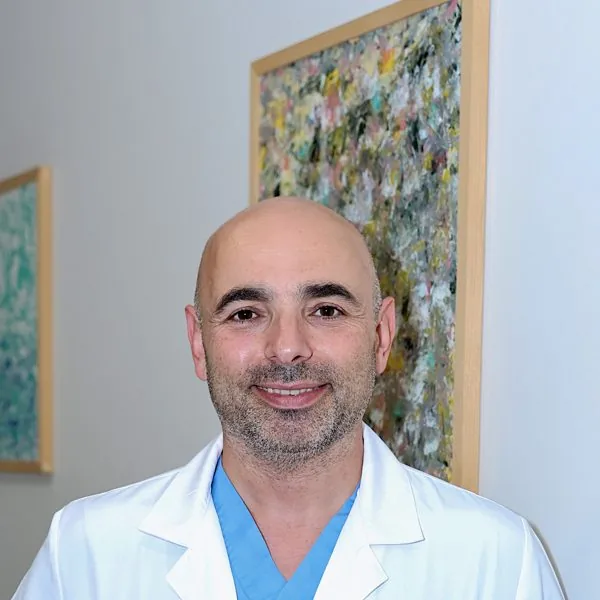
Op. Dr. Ali İhsan Gönenç
Obstetrics & Gynecology · IVF, Medical Park Bahçelievler IVF Center
Op. Dr. Ali İhsan Gönenç is an experienced obstetrician and gynecologist focused on infertility and IVF. The medical information on this page has been reviewed by him for accuracy.
View Doctor Profile →Frequently Asked Questions
Common questions, clearly answered.
✓ Medical content reviewed by Op. Dr. Ali İhsan Gönenç · Last updated: July 2026
The suitable method varies by your diagnosis and history, and is recommended after evaluation.
Yes, treatments are provided at the IVF unit of Medical Park Bahçelievler Hospital.
Treatments include IVF, ICSI, PICSI, genetic testing (PGT), egg and embryo freezing, frozen embryo transfer and IUI. The right option is determined individually.
The suitable treatment is determined after a personal evaluation based on your medical history, tests and examination. The goal is a plan that fits your situation with the least intervention.
In IUI, prepared sperm is placed into the uterus and fertilization happens naturally in the body; in IVF, fertilization takes place in the laboratory. Which one is suitable depends on the diagnosis.
In conventional IVF, sperm and egg fertilize on their own in the lab; in ICSI, the sperm is injected directly into the egg. ICSI is preferred especially for male-factor infertility.
The first step is a personal medical evaluation. Based on your diagnosis, the necessary tests are done and a treatment plan is created for you.
Hormone tests, ultrasound, semen analysis and other assessments may be performed as needed. These help personalize the treatment plan.
A single IVF cycle usually takes about 2-3 weeks; the duration varies by treatment type and personal circumstances.
Most procedures are performed comfortably with light sedation or local methods, and embryo transfer is usually painless. Your comfort is prioritized throughout.
Sources
Related Reading
- IUI vs IVF: Differences and How to Choose
- Fertility Testing: How to Know If You Are Fertile (Female and Male)
- Egg Freezing: A Complete Guide, Who It's For, How It Works, FAQs
- PGT (Preimplantation Genetic Testing) Explained
Sources
The information on this page is supported by the following independent, authoritative sources:
Book your consultation with Op. Dr. Ali İhsan Gönenç
No pressure · Medical evaluation first · Clear communication